HomeVenues
Sandton Convention Centre Exhibitor Guide
Plan Your Stand At Sandton Convention Centre, Without Surprises
What South African Businesses Need To Know
For prospective exhibitors, Sandton Convention Centre (SCC) is best approached as a high-capacity, organiser-led venue rather than one with a published universal exhibitor handbook and tariff book. Around 22,000 m² of flexible event space across multiple levels, with two principal exhibition halls totalling roughly 11,000 m²: Exhibition 1 at 5,430 m² and Exhibition 2 at 5,050 m², each with a 6.5 m ceiling. Exhibition 1 has street-level access, valuable for heavy freight, vehicles, and short build windows.
The most important commercial point: SCC publishes its own venue pricing model, not an all-purpose exhibitor stand price list. Venue terms state exhibition pricing is quoted per day, per m², exclusive of VAT. Standard inclusions are a clean venue, perimeter security, fixed lighting, and the in-house PA. Air-conditioning runs on event days only; electricity is metered and charged on consumption. In practice, actual stand prices are set by each organiser, not by SCC.
Operationally, the biggest avoidable failures at SCC are not design failures but compliance failures: missing electrical certificates, under-ordering power, ignoring timed loading-bay slots, assuming storage will be available behind the stand, or designing covered or multi-level elements too late for approval. The practical planning rhythm is therefore clear: reserve early, freeze the stand concept early, appoint compliant contractors early, and treat the 30-day-before-open mark as the hard compliance date for insurance and any specialist safety approvals.
The Venue Layout
Floor areas, ceiling heights, and how the spaces are typically used.
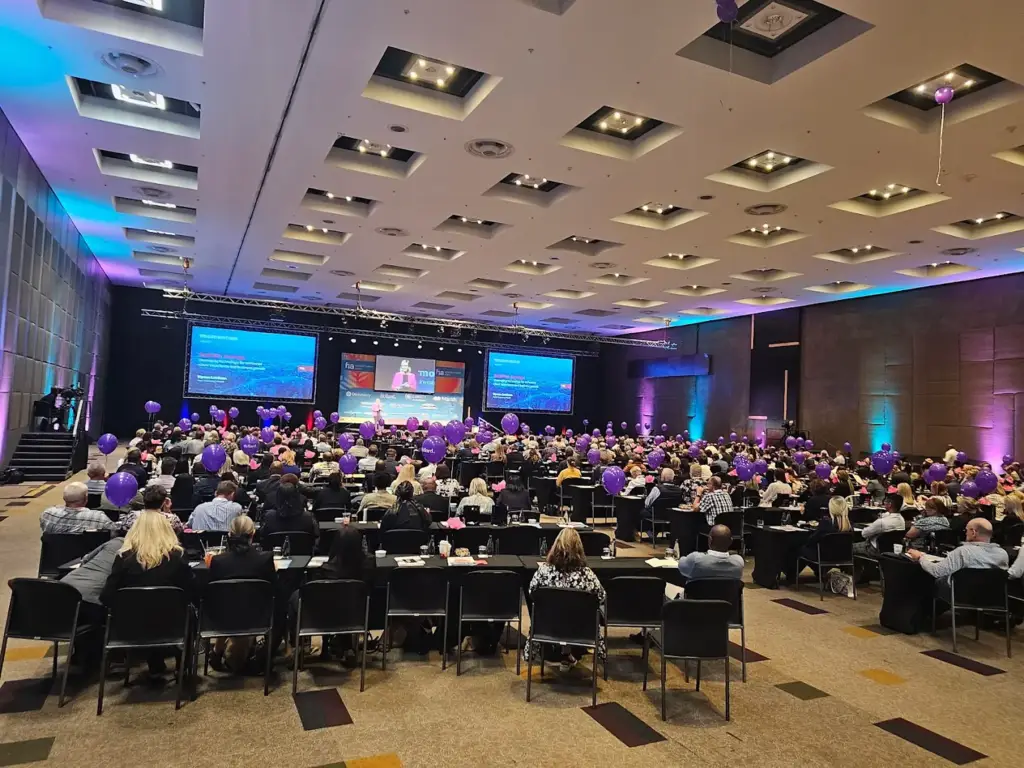
SCC offers around 22,000 m² of flexible event space across four main event levels, with two principal exhibition halls, a ballroom, the Pavilion, and a main foyer. Capacity figures below are venue-published maximums; they are not net-exhibition sellable space and should not be used for stand-grid calculations without the organiser’s current floor plan.
Exhibition 1
Size: 5,430 m²
Dimensions: 61 m × 91 m
Ceiling: 6.5 m
Street-level set-up access. Useful for heavy build and direct deliveries. Cocktail capacity 4,200; cinema 4,100.
Exhibition 2
Size: 5,050 m²
Dimensions: 90 m wide
Ceiling: 6.5 m
Large-format hall suited to trade shows and adaptable functions. Cocktail 3,900; cinema 3,800.
Main Foyer
Size: 832 m²
Dimensions: 8 m × 89 m
Ceiling: Not published
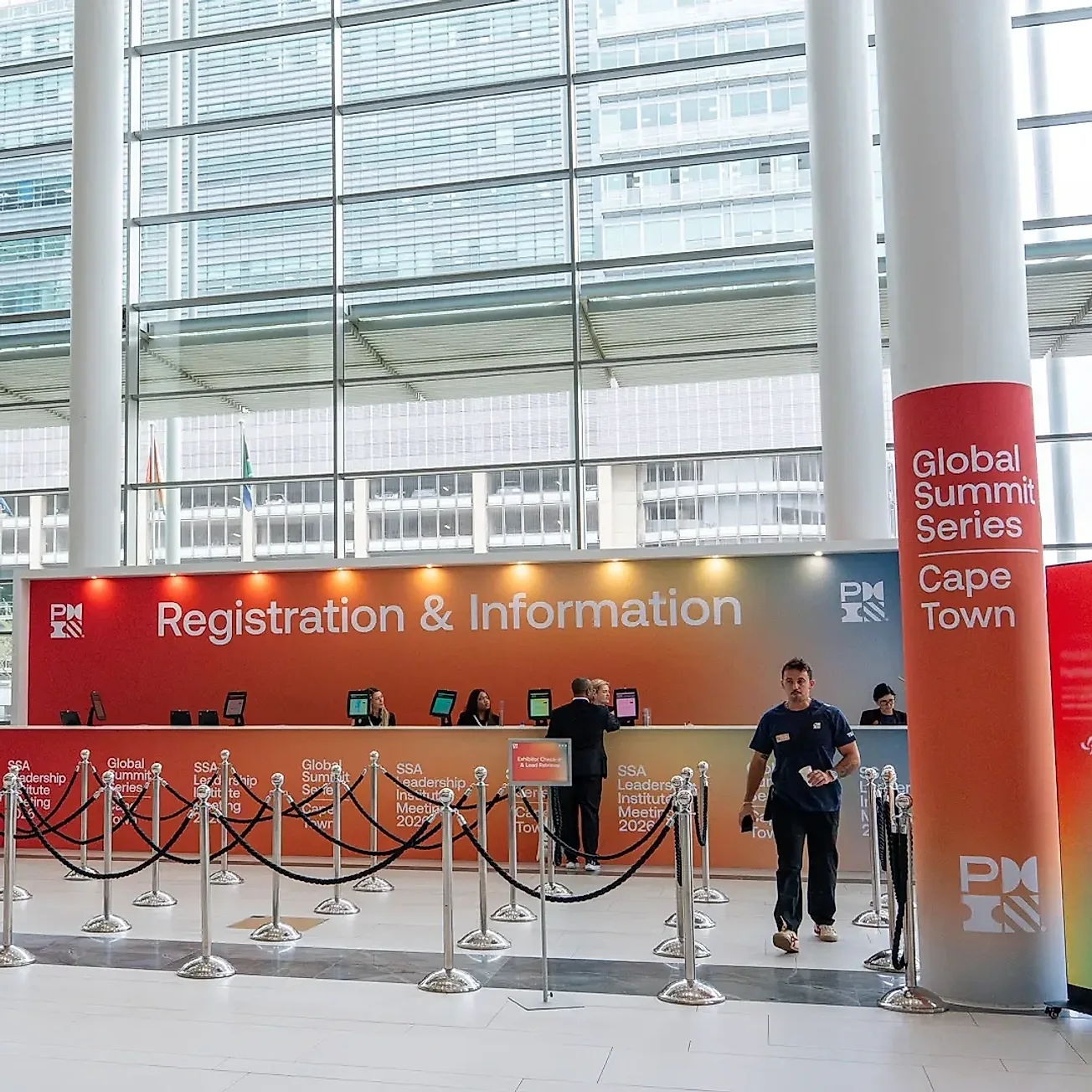
Useful for registration, sponsor activation, or overflow networking. Cocktail capacity 700.
The Ballroom
Size: 2,921 m²
Dimensions: 47.5 m × 61.5 m
Ceiling: 7.5 m
More often used for conference, gala, or exhibition overflow rather than conventional stand grids.
The Pavilion
Size: 4,743 m²
Dimensions: 53 m × 89.5 m
Ceiling: 8.5–11 m
Best reserved for special events, launches, very large features, or plenary-plus-expo hybrids.
Worth knowing — Public floor plans are illustrative. Organisers may reconfigure hall usage by event; always request the latest working floor plan, utility plan, and rigging mark-up from the organiser before locking design or graphics.
What Sandton Convention Centre Is Best For
Use cases this venue serves well, and where a different choice would be smarter.
Sandton Convention Centre is the right venue for:
- High-capacity, multi-day trade shows and conferences where the Gauteng decision-maker catchment is the primary target market.
- Events combining a major exhibition floor with a substantial conference programme: the multi-level layout supports both running simultaneously.
- Brands targeting senior decision-makers in financial services, ICT, mining, professional services, and the corporate clusters around the Sandton CBD.
- Shows that benefit from premium business-district context and Gautrain access: Sandton Station is within walking distance and OR Tambo is reachable in ~14–15 minutes by rail.
When SCC is NOT the right fit:
Sandton Convention Centre events are usually not single-hall mega shows for a reason. If your show needs a single column-free hall at scale beyond ~5,500 m², a campus-style multi-hall layout, or easier large-vehicle access without timed loading slots, look at Gallagher Convention Centre instead.
SCC’s strength is mid-to-large integrated trade-show and conference events in a multi-level CBD setting.
The Build Process
Move-in logistics, height limits, rigging arrangements, and build windows.
Move-in
SCC operates with timed loading slots and marshalled bays. There is no holding area, drivers must remain with vehicles throughout, and time-slot overruns are penalised. Move-in is managed through the event organiser, who issues your dock window and access route in the exhibitor manual.
Worth knowing — Loading-bay slots fill earliest in the event calendar. Confirm your dock window before stand design is finalised, not after. Vehicles overstaying their slot have been fined R500 per 30 minutes in recent SCC manuals.
Key Practicalities
- Access routes: Level -2 / Alice Lane and Level 0 / Maude Street are the two marshalled routes. Truck length restrictions of 12 m apply on those routes.
- Loading doors: Alice Lane route 5,900 mm W × 4,800 mm H. Maude Street route 6,000 mm W × 4,600 mm H. Confirm in your event exhibitor manual.
- Goods lifts (upper levels): 2,500 mm W × 2,500 mm H × 5,800 mm D, maximum 3.5 tonnes. Break large scenic pieces into lift-safe modules for upper-level builds.
- Floor loading: 1,500 kg/m² maximum on multiple SCC levels used for exhibitions. Heavy plant, vehicles, and stone slabs should still be individually checked against the live hall configuration.
- Storage: Storage of crates and boxes behind stands is prohibited. Early deliveries may attract storage charges. Budget for empty-case storage and return handling.
- Service ordering: Service forms typically due around six weeks before opening. Late orders incur surcharges.
Regulatory framework:
The Construction Regulations 2014 under the Occupational Health and Safety Act (OHSA) apply to all exhibition stand construction in South Africa. SCC additionally requires: an Electrical Certificate of Compliance for every temporary electrical installation, structural and rigging certificates from competent persons, and fire-retardancy certificates for combustible materials. Covered stands need approval from Johannesburg Emergency Management Services with copy submitted at least 30 days before the event. Insurance proof and any covered-stand approvals must be delivered 30 days before opening.
Stand Height
SCC publishes ceiling heights of 6.5 m in Exhibition 1 and 2, and up to 11 m in the Pavilion, but does not publish a single venue-wide maximum stand height. Event-specific limits apply, set by each show’s organiser based on sightlines and floor configuration. Confirm in your event exhibitor manual.
Worth knowing — Maximum build height varies per event because of show-floor sightlines, not just venue capacity. Always check the show’s specific limit before committing to a double-decker design.
Rigging
INHOUSE Venue Technical Management (IVTM) is SCC’s on-site technical AV provider and is involved in all rigging activity. SCC rules require competent riggers, test certificates, marked safe working loads, unique rigging IDs, and secondary safeties. Safe working load guidance in the SCC rules is 6:1 for rigging gear and 10:1 when lifting persons. Public rigging-point data per hall is not published; request the latest plot from the organiser or IVTM. Treat all flown items as engineered work and get written approval before selling suspended branding to your client.
Book rigging early:
Rigging slots and motor-hoist availability are limited and lead times tighten significantly in the four weeks before move-in. Late orders incur surcharges.
Build Days
Public SCC organiser manuals show service-form deadlines commonly landing around six weeks before opening, with the 30-day mark as the hard date for insurance proof, structural and rigging certificates, fire-retardancy certificates, and covered-stand approvals. Build windows are show-specific: confirm in your exhibitor manual.
Worth knowing — Tight build windows often mean overnight builds. Plan crew rotation and budget accordingly; night-shift surcharges from contractors are standard. Recent SCC manuals have also imposed penalties for late completion.
Getting To Sandton Convention Centre
Address, public transport options, road access, and parking arrangements.
Location
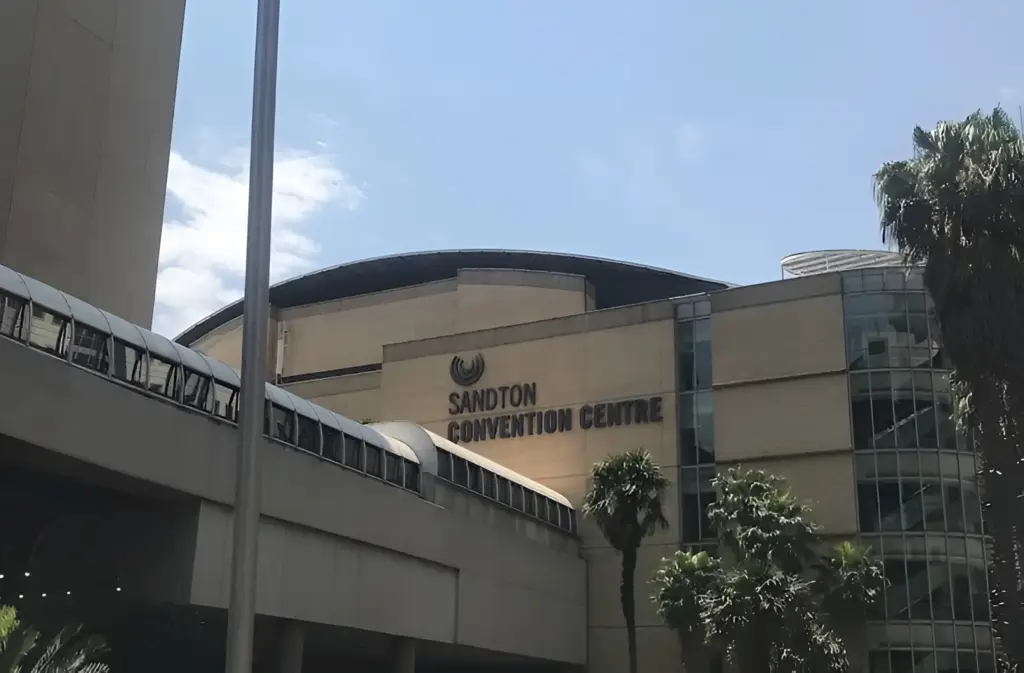
SCC sits in the heart of Sandton at 161 Maude Street, Sandton, 2196. The venue forms part of the Sandton City precinct and is linked to Sandton Sun and Sandton Towers hotels by skywalk. SCC’s official accommodation page says it can access around 5,000 hotel rooms within walking distance.
By Public Transport
- Gautrain: Sandton Station is within walking distance of the venue. The Gautrain network connects to Pretoria, Johannesburg Park Station, and Rosebank.
- Airport — OR Tambo International: ~14–15 minutes by Gautrain; about 35 minutes by road, traffic-dependent.
Worth knowing — SCC’s Gautrain link makes half-day attendance from Pretoria and central Joburg viable, which affects catering, demo timing, and stand staffing. Visitors arriving by rail are typically more time-constrained than drive-in attendees.
By Road
SCC is in the Sandton CBD, accessible from the M1 motorway via the Grayston off-ramp. Practical approaches for build vehicles use the marshalled loading routes via Alice Lane (Level -2) or Maude Street (Level 0). Truck-length restrictions of 12 m apply on those routes.
Parking: SCC publishes about 300 bays beneath the venue plus nearly 11,000 spaces in the adjacent Sandton City and Nelson Mandela Square parking. Parking tariffs are not published in venue material; Sandton CBD rates apply. Confirm height restrictions before bringing vans or high-roof vehicles.
On-site Services
Wi-Fi, catering, furniture, and air-conditioning at SCC.
SCC’s exhibitor services are provided through appointed in-house contractors, who hold first right of quote on most service categories.
Wi-Fi and IT: Telecommunications and IT are exclusive to SCC’s appointed provider. Public services include networking, dedicated internet, web streaming, video conferencing, and high-speed connectivity. Public bandwidth and tariff sheets are not published, so request a current quote. If your stand mission depends on stable connectivity, order a dedicated wired service rather than relying on visitor Wi-Fi.
Catering: SCC is the sole F&B provider in public organiser materials. Corkage applies to outside food and drink. If you are planning hospitality on your stand (coffees, refreshments, or a hosted bar), it needs to go through venue catering.
Furniture: SCC does not supply default stand furniture. Tables, chairs, and display items must be ordered through the event organiser’s portal or a stand contractor. SCC’s named furniture and shell-scheme supplier is Two Way Exhibitions and Events.
Air-conditioning: Provided during event days only, not during set-up or breakdown days for exhibitions. Plan for hotter build conditions for crews, adhesives, and temperature-sensitive products.
Power: Electricity is metered and charged on consumption. SCC rules note 15 A per stand should cover basic needs; heavier loads use 16 A, 32 A, 62 A, or 125 A three-phase supplies on request. Large loads are handled via the contract services manager. Provide a full load schedule rather than relying on a default order if you have refrigeration, printers, kettles, heating, machinery, demo kitchens, or LED walls.
Worth knowing — Tied caterers often quote per-head pricing only at booking. Get a hospitality budget at venue contracting, not stand fit-out, or you risk last-minute over-spend.
Worth knowing — A recent SCC organiser manual described the venue generator during load-shedding as supporting emergency lighting and low-voltage plugs only, not full exhibitor machinery loads. Confirm backup configuration for your specific show rather than assuming continuous power.
Costs To Plan For
Indicative rates for stand space, services, rigging, and ancillaries.
SCC does not publish a universal exhibitor stand price card. Venue pricing is set by day and m² (exclusive of VAT) for the venue itself; actual stand prices come from individual event organisers. The most reliable public cost markers are below; treat them as illustrative only.
Stand space — organiser package
Event-specific. One 2026 design-district event publicly showed R5,278/m² for floorspace plus package, with 9 m² at R47,502 and 12 m² at R63,336. This is not an SCC-wide tariff.
Stand space — venue base rate
Quoted per day, per m², exclusive of VAT 15%. The venue rate is not publicly disclosed and is set by SCC sales for each event.
Power
Metered and charged on consumption. 15 A default per stand; 16 A, 32 A, 62 A, and 125 A three-phase supplies are available on request.
Rigging
Handled through INHOUSE Venue Technical Management (IVTM). Quote-based with no public rate card.
Wi-Fi / IT
Provided through SCC’s appointed IT provider. Order a dedicated wired connection 4–5 weeks before the event if connectivity matters.
Furniture
Custom and modular display solutions are available via Booth Exhibits™.
Catering
Sole food and beverage supply goes through SCC catering. Corkage applies to outside food and drink.
Stand cleaning / security
Not included in the standard exhibition booking. Order both separately where needed.
Insurance — public liability
Minimum R11 million per occurrence, with SCC’s interest noted and proof submitted 30 days prior. SCC also publishes fallback daily charges if proof is missing.
Penalties (organiser examples)
Examples include R500 per 30 minute loading-bay overstay, R2,500 late build cleaning, and R5,000 incomplete breakdown. Keep a contingency line in the budget.
Parking
About 300 bays sit beneath the venue plus around 11,000 in adjacent Sandton City. Tariffs are not published and typical Sandton CBD rates apply.
Always get a current quote:
Rates above are illustrative and event-specific. SCC venue terms set the charging logic but not a universal all-in stand rate. Request quotes from the venue’s official contractors at least 6–8 weeks before the event.
Sandton Convention Centre vs Gallagher Convention Centre
How SCC compares to Gallagher on scale, audience reach, and character.
Both are major Joburg venues but serve different show profiles. The decision usually comes down to three factors:
Scale
Sandton Convention Centre: Around 11,000 m² across two main exhibition halls plus the 4,743 m² Pavilion. Best for mid-to-large integrated trade-show and conference formats.
Gallagher Convention Centre: Substantially more single-hall floor area on a campus model. Best for large trade shows needing column-free space at scale.
Visitor profile
Sandton Convention Centre: Stronger fit for senior decision-makers in financial services, ICT, mining, and professional services clustered around Sandton CBD, with excellent Gautrain access.
Gallagher Convention Centre: More car-arrival-led, with broader Gauteng reach and less of a CBD business-district feel.
Environment
Sandton Convention Centre: Premium CBD setting with hotel links, Gautrain access, and a polished multi-level venue experience.
Gallagher Convention Centre: More pragmatic exhibition-shed feel, with easier large-vehicle access and stronger on-site parking convenience.
Sandton Convention Centre and Booth Exhibits™
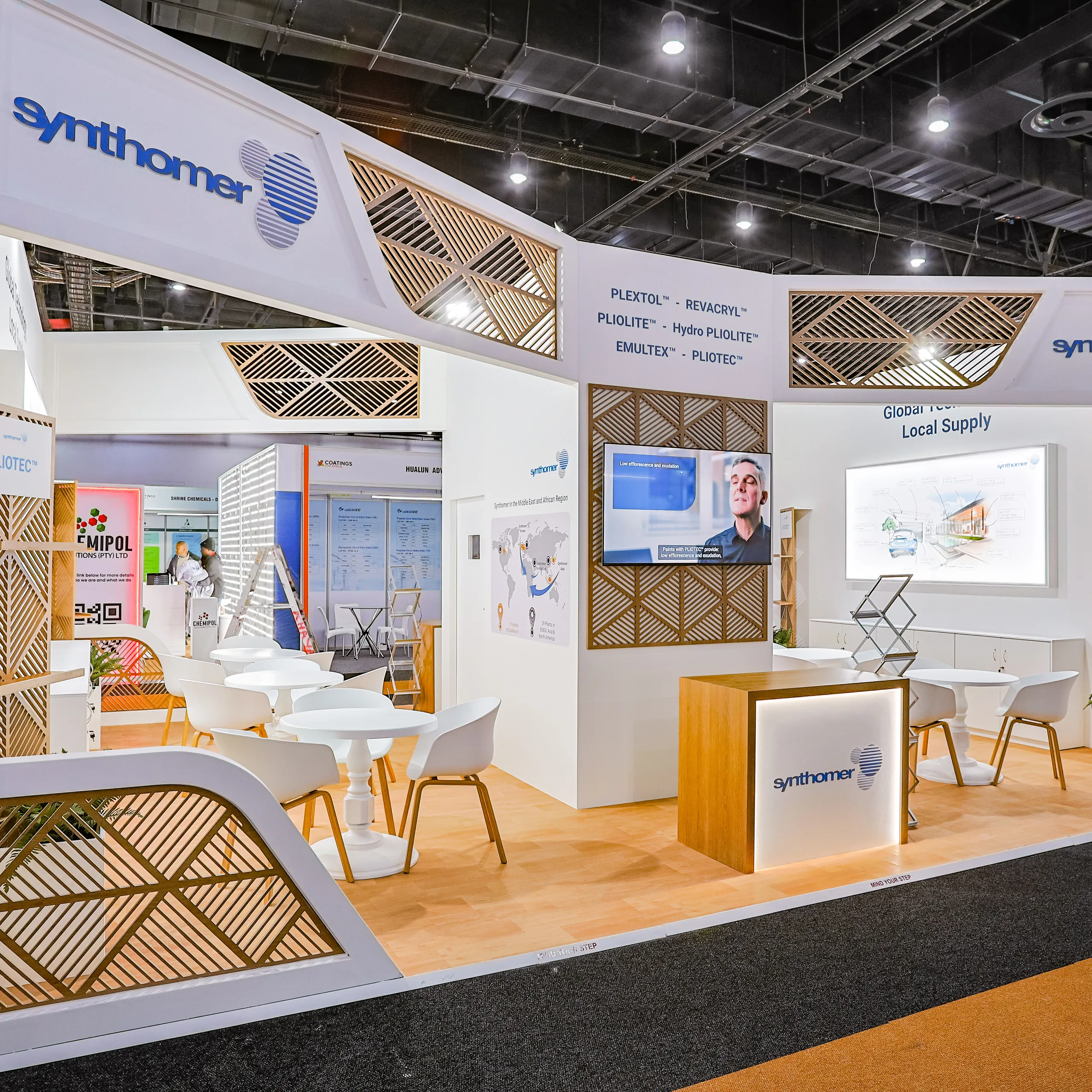
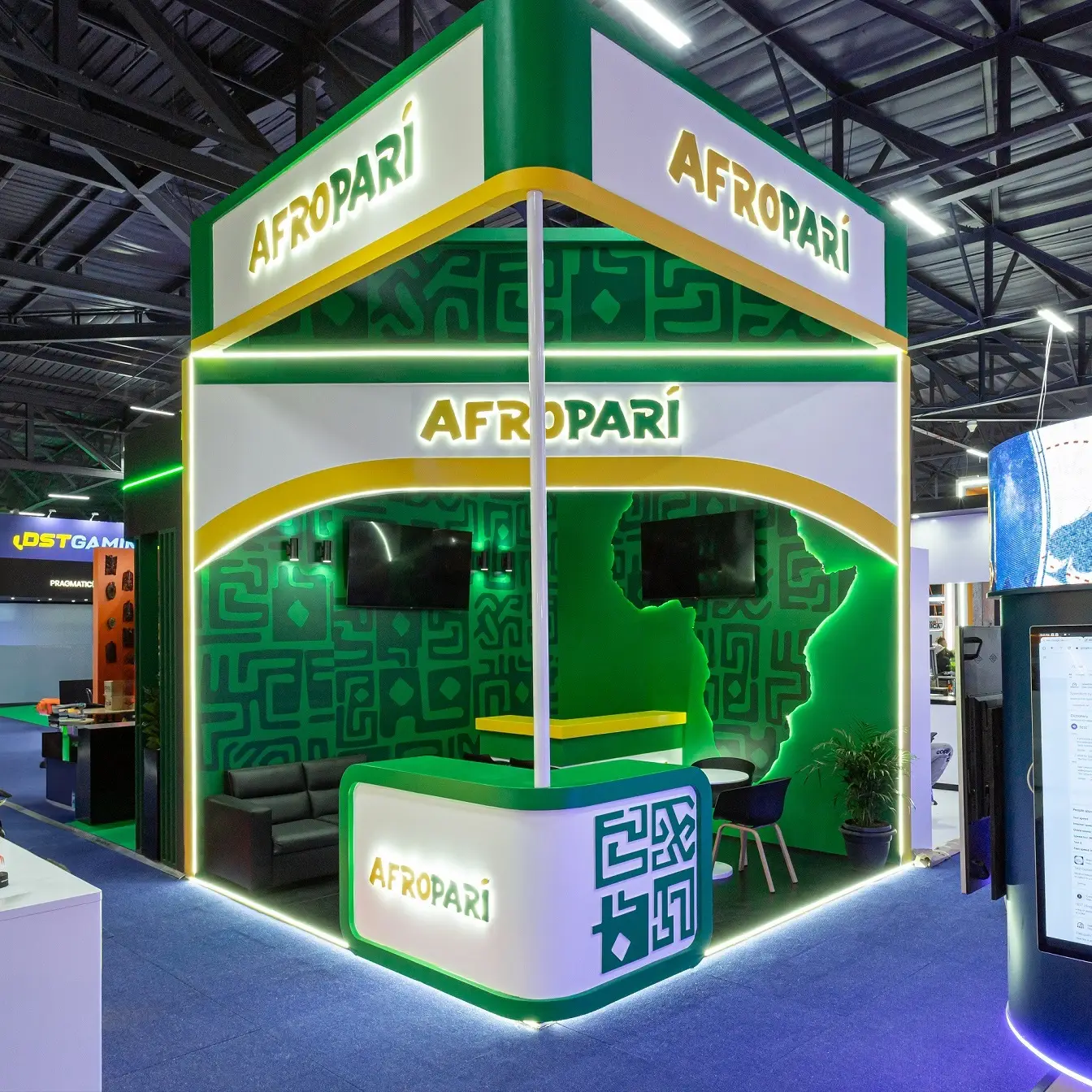
Booth Exhibits™ has experience designing and building stands at Sandton Convention Centre across financial services, ICT, mining, and professional-services events. For ideas on stand design that works in the venue’s multi-level, premium-CBD context, see our project portfolio. To see your options at the SCC, see our South African exhibition stand design and build services.
Contact The Booth Exhibits™ Team
Exhibitor Templates
Working planning templates for SCC. Use as a starting point and adapt to your specific show and organiser.
Exhibitor timeline
6–9 months before open
Owner: Commercial lead
Signed exhibitor or sponsorship contract in place and latest floor plan obtained.
4–6 months before open
Owner: Project manager
Stand builder, freight agent, and technical lead appointed.
10–12 weeks before open
Owner: Design lead
Final stand concept, scale plan, and power schedule agreed. Escalate any rigging, gas, vehicle, or covered-stand items.
~6 weeks before open
Owner: Ops lead
Submit service forms, exhibitor forms, indemnities, and contractor information. Order utilities, cleaning, security, and badges.
30 days before open
Owner: Safety lead
Insurance proof to SCC, structural and rigging certificates, fire-retardant certificates, and covered-stand approvals from Johannesburg Emergency Management Services.
14 days before open
Owner: Logistics lead
Loading-bay slot confirmed, delivery labels finalised, customs status checked, and crew lists plus badges submitted.
7 days before open
Owner: Stand manager
Toolbox talk with contractors complete, snag list prepared, and emergency contacts circulated.
Build-up
Owner: Stand manager
Electrical sign-off complete, aisles kept clear at 3 m minimum, and the stand fully dressed before organiser cleaning cut-off.
Breakdown
Owner: Logistics lead
Repack freight, retrieve empty cases, remove waste, hand over freight, and vacate on time to avoid penalties.
Stand checklist
- Stand type confirmed: space-only / shell scheme / package / custom.
- Latest organiser floor plan and stand number received.
- Power schedule calculated item by item.
- Internet requirement confirmed: shared Wi-Fi or dedicated wired service.
- Structural review completed for any bridge, portal, header, rigged sign, or raised deck.
- Electrical contractor appointed and Certificate of Compliance scheduled.
- Fire-retardancy certificates collected for drape, fabric, timber treatment, or scenic finishes.
- Public liability wording checked; SCC interest noted; minimum R11m per occurrence.
- Loading-bay slot confirmed; all drivers briefed in writing.
- Empty-case and storage method confirmed.
- Stand cleaning and stand security ordered if needed.
- Catering / sampling permissions obtained.
- Emergency exits and gangways shown on internal stand plan; aisles ~3 m clear.
- Breakdown method planned before the show opens.
- Crew rotation and night-shift surcharges accounted for.
Risk assessment template
Temporary electrical installation
Initial risk: High
Control measures: Registered wireman, compliant cabling, no twinflex, no 15 A double adapters, and Certificate of Compliance before energisation.
Evidence: Electrical Certificate of Compliance.
Flown sign / truss / rigged AV
Initial risk: High
Control measures: Engineered design, competent rigger, safe working loads marked, secondary safeties fitted, and written IVTM approval.
Evidence: Rigging certificate or engineer sign-off.
Combustible décor / drapes
Initial risk: High
Control measures: Fire-retardant materials or treatment, extinguisher provision, and no blocked exits.
Evidence: Fire-retardant certificate.
Vehicle display
Initial risk: High
Control measures: Maximum 10 L fuel, battery disconnected, drip trays, visible extinguishers, and route plus floor-loading checks.
Evidence: Vehicle method statement.
Covered / multi-level stand
Initial risk: High
Control measures: Detailed drawings submitted, JEMS approval obtained, and structural certificates from a competent person.
Evidence: JEMS approval at least 30 days before open.
Build-up crowding / blocked gangways
Initial risk: High
Control measures: Aisles kept at 3 m or wider, timed unloading enforced, and waste removed immediately.
Evidence: Supervisor inspection log.
Hot work / sampling / demos
Initial risk: Medium
Control measures: No painting, welding, or cutting inside the hall; hot-work permit where required; approval for cooking demos; queueing kept inside the stand footprint.
Evidence: Hot-work permit and organiser approval.
Late freight / missed slot
Initial risk: Medium
Control measures: Confirm ETA, label freight correctly, brief drivers in writing, and hold margin around the time-slot window.
Evidence: Freight plan and slot confirmation.
Theft / unattended valuables
Initial risk: Medium
Control measures: Lockable storage, nightly removal of valuables, and stand security where needed.
Evidence: Security order or internal SOP.
Quick Reference
All key venue specs in one place for fast lookup.
Total venue space
~22,000 m² across four main event levels
Main exhibition halls
Exhibition 1: 5,430 m² (61 × 91 m); Exhibition 2: 5,050 m²
Pavilion
4,743 m² (53 × 89.5 m)
Ceiling height
6.5 m in Exhibition 1 and 2; up to 11 m in the Pavilion
Max stand height
Event-specific. No published venue-wide limit; confirm in the exhibitor manual.
Loading doors
Alice Lane: 5.9 m W × 4.8 m H. Maude Street: 6.0 m W × 4.6 m H. Trucks max 12 m.
Goods lifts
2.5 m W × 2.5 m H × 5.8 m D, max 3.5 tonnes
Floor loading
1,500 kg/m² maximum
Power
Metered, with 15 A default per stand and up to 125 A three-phase on request
Wi-Fi / IT
Exclusive to SCC’s provider. Order a dedicated wired connection if needed.
Air-conditioning
Runs on event days only, not during set-up or breakdown
Public transport
Sandton Gautrain station is within walking distance
Airport
OR Tambo is around 14–15 minutes by Gautrain or roughly 35 minutes by road
Parking
About 300 bays beneath the venue plus around 11,000 in adjacent Sandton City
Rigging
Handled through INHOUSE Venue Technical Management with competent riggers and certification
Catering
SCC is the sole food and beverage provider; corkage applies to outside supplies
Insurance
Public liability of at least R11 million per occurrence, submitted 30 days before open
Regulations
Construction Regulations 2014 (OHSA), with JEMS approval for covered stands
Address
161 Maude Street, Sandton, 2196
Other South African Venues
Exhibiting in South Africa?
Planning An Exhibition In South Africa?
From Sandton Convention Centre to the CTICC, Durban ICC and Gallagher, one team designs, builds and installs your stand at every major venue.
Book a call




Let’s Dominate Your Next Show
Five fields and your floor plan. We come back with an accurate cost and a design direction within 24 hours.