What South African Businesses Need To Know
For prospective exhibitors, the Cape Town International Convention Centre (CTICC) is best approached as a two-building, source-stack venue rather than one with a single all-purpose exhibitor handbook. The full complex totals around 140,855 m² across CTICC 1 and CTICC 2, connected by a skybridge. The two anchor exhibition options are the full CTICC 1 exhibition centre at 11,399 m² and the combined Halls 5–7 in CTICC 2 at 4,937 m².
The most important technical point is that hall floor loads vary sharply across the complex. Halls 2 and 3 carry 3,000 kg/m² and suit heavy exhibits and machinery; Halls 8–10 carry only 750 kg/m² and suit lighter, smaller stands. Halls 1A, 1B, 4A, and 4B carry 1,500 kg/m² and are not carpeted by default; Halls 5, 6, 7 are carpeted and carry 2,000 kg/m². Picking the wrong hall for a heavy build is the single biggest avoidable failure at CTICC.
Operationally, CTICC’s compliance path is unusually important. Exhibition floor plans must be approved by CTICC and a City fire/safety official three months before build-up; permit packs for temporary structures should reach CTICC 45 days before the event.
Get the hall right, get the plans submitted on time, book marshalling-yard slots, and order dedicated connectivity if your stand depends on it; the free Wi-Fi is unsecured and not for business-critical use.
The Venue Layout
Floor areas, ceiling heights, floor loads, and how the spaces are typically used.
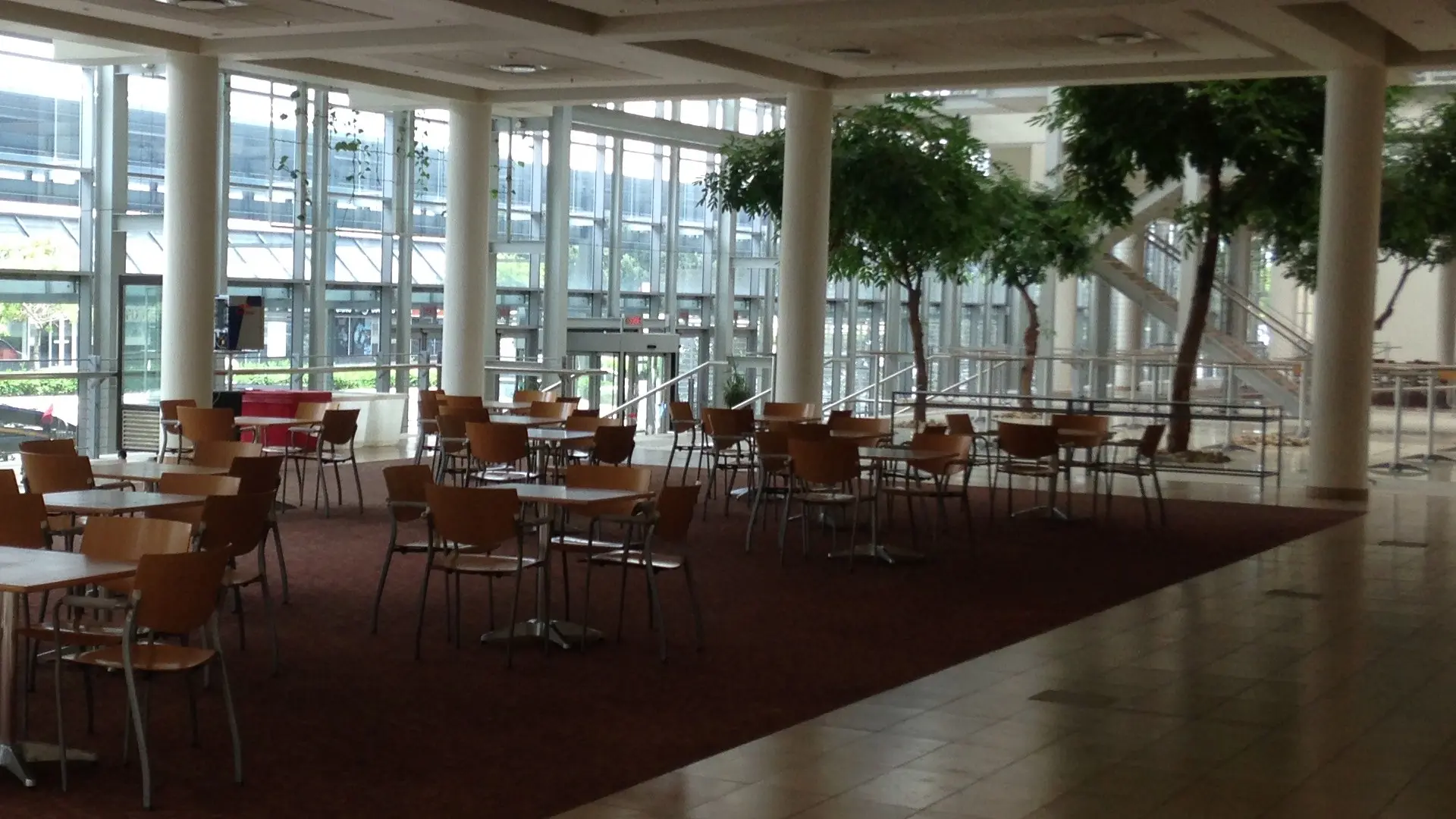
CTICC offers around 140,855 m² across two connected buildings. CTICC 1 has the full exhibition centre at 11,399 m² split across Halls 1A, 1B, 2, 3, 4A, and 4B. CTICC 2 has Halls 5, 6, 7 (lower level, 4,937 m² combined) and Halls 8, 9, 10 (upper level). All halls have published rigging capacities and floor-load limits; you should map your exhibit weight to the right hall before sales close, not after.
Halls 1A, 1B, 4A, 4B
Floor load: 1,500 kg/m²
Ceiling: 9 m to 18 m depending on hall
Carpeting: Not included; arrange separately at R32/m²
Raw-space and large shell-scheme events. Service doors typically 7.2 m W × 5.3 m H; Hall 4B has a larger 7.98 m × 5.90 m service door for oversize freight. Rigging up to 600 kg per node and up to 3,000 kg per structural beam.
Halls 2 and 3
Floor load: 3,000 kg/m²
Ceiling: 10 m to 18 m
Carpeting: Not included; arrange separately
The strongest CTICC option for heavy exhibits, vehicles, machinery, and dense custom stands. Same CTICC 1 power and access pattern as Halls 1A–4B. Default exhibitors with heavy product to these halls first.
Halls 5, 6, and 7
Floor load: 2,000 kg/m²
Ceiling: 9 m to 12 m
Carpeting: Hall is carpeted
CTICC 2 lower-level halls. Combined area 4,937 m². Floor trenches every 4.5 m carry power and data services. Hall 7 has direct Marshalling Yard access; freight for Halls 5 and 6 is staged behind the halls.
Halls 8, 9, and 10
Floor load: 750 kg/m²
Ceiling: 10 m to 12 m
Carpeting: Halls are carpeted
CTICC 2 upper-level halls. Best for lighter exhibits, smaller displays, and upper-level shows. Pit boxes 5 m apart under the floor; raised floors must preserve trapdoor access. The 750 kg/m² limit is restrictive; confirm load before committing any heavy exhibit to these halls.
Worth knowing — CTICC publishes hall-by-hall floor plans and rigging capacities, but a detailed rigging plot with weights still has to be submitted to CTICC before the event. Treat the public floor plans as a starting point for hall selection, not for final design.
What CTICC Is Best For
Use cases this venue serves well, and where a different choice would be smarter.
CTICC is the right venue for:
- Major Cape Town and Western Cape trade shows where the regional decision-maker catchment is the primary target market.
- Multi-hall events combining exhibition, conference, and breakout programming: the CTICC 1 + CTICC 2 layout via the skybridge supports parallel formats.
- Exhibits with heavy machinery, vehicles, dense product stacks, or major suspended loads (Halls 2 and 3 carry 3,000 kg/m²).
- International shows that need confidence in compliance: CTICC has a structured permit and approval process and on-site clinic capability.
- Brands that want a Cape Town foreshore venue with hotel walking distance and easy airport access (about 20 km).
When CTICC is NOT the right fit:
If your show needs a single column-free hall larger than ~11,400 m², a venue with on-site storage, or a Gauteng-centric audience, look at Sandton Convention Centre, Gallagher or a different format. CTICC’s strength is mixed-hall, multi-format events with strong compliance and Cape Town foreshore positioning, not single-hall mega-shows.
The Build Process
Move-in logistics, height limits, rigging arrangements, and build windows.
Move-in
CTICC operates two Marshalling Yards: one for CTICC 1 (about 5,000 m²) and one for CTICC 2 (opposite the halls). Vehicles get 1.5 hours and trucks get 3.5 hours; exceeding those limits triggers fees and unattended vehicles may be clamped. Slot booking is mandatory and must be arranged with CTICC logistics in advance. Most CTICC 1 halls open directly onto the yard via large service doors. In CTICC 2, only Hall 7 has direct yard access; freight for Halls 5 and 6 is staged behind the halls.
Worth knowing — CTICC requires advance registration with logistics and slot booking before move-in. Confirm your dock window before stand design is finalised, not after. Late-arriving freight can cost a full day of build time.
Key Practicalities
- Service doors: typically 7.2 m W × 5.3 m H across the principal exhibition halls. Hall 4B has a larger 7.98 m × 5.90 m opening for oversize freight.
- Parking height limits: P1, P3, and P5 garages all have a 2.1 m height restriction. Vans and small trucks for build are fine; oversize exhibits must use service doors directly.
- Floor loads: 3,000 kg/m² in Halls 2 and 3; 1,500 kg/m² in Halls 1A–4B; 2,000 kg/m² in Halls 5–7; 750 kg/m² in Halls 8–10. Match hall to exhibit weight before sales close.
- No on-site storage: packing materials and empties must be planned with the show forwarder or off-site material handling.
- Build hours: 06:00 to 23:59 unless otherwise arranged.
- Aisles: minimum 3 m width.
Regulatory framework:
The Construction Regulations 2014 under the Occupational Health and Safety Act apply to all exhibition stand construction in South Africa. CTICC additionally requires: an Electrical Certificate of Compliance for every temporary electrical installation, structural and rigging certificates from competent persons, fire-retardant certificates for combustible materials, and City of Cape Town fire/safety sign-off for covered or temporary structures. Insurance proof and any covered-stand approvals must be delivered ahead of build.
Stand Height
CTICC does not publish a single venue-wide stand-height cap. Instead, custom stands higher than 3 m, double-tier stands, roofed stands, marquees over 100 m², raked seating, complex rigging, and stages or ramps higher than 600 mm trigger formal approval. Breakout-room shell scheme is capped at about 2,500 mm with 1,800 mm × 3,090 mm doors and 600 mm minimum clearance above for sprinklers.
Worth knowing — CTICC’s rule is approval-based rather than a single height cap. If your concept includes anything overhanging, double-tier, roofed, or scaffold-supported, treat it as a permit item and budget for engineer sign-off.
Rigging
CTICC uses a contracted preferred rigging supplier and applies charges per rigging point. All rigging details, weights, plans, and any temporary smoke-detector isolation requests must be submitted in advance, plus an emergency retrieval plan to the safety officer. External riggers need a medical certificate and full health and safety compliance. No external contractor may start on shell schemes before all rigging points and truss are installed.
Book rigging early:
CTICC’s contracted rigging supplier handles all rigged elements; capacity tightens significantly in the four weeks before move-in. Submit your rigging plot with weights early; late or undocumented rigging requests are refused.
Build Days
CTICC’s public build-up and breakdown hours are 06:00 to 23:59. Hard deadlines: floor plans approved 3 months before build-up; permit packs for temporary structures and structural-engineer documents 45 days before the event. Some access equipment (MEWPs, height-access kit) needs ordering at least 72 hours before build day. Service forms and standard orders should land at least 10–20 working days out to avoid surcharges.
Worth knowing — Tight build windows still mean planning night shifts and crew rotation if your stand is complex. CTICC charges late-build penalties and after-hours surcharges; plan your build pace from move-in not from show-open.
Getting To CTICC
Address, public transport options, road access, and parking arrangements.
Location
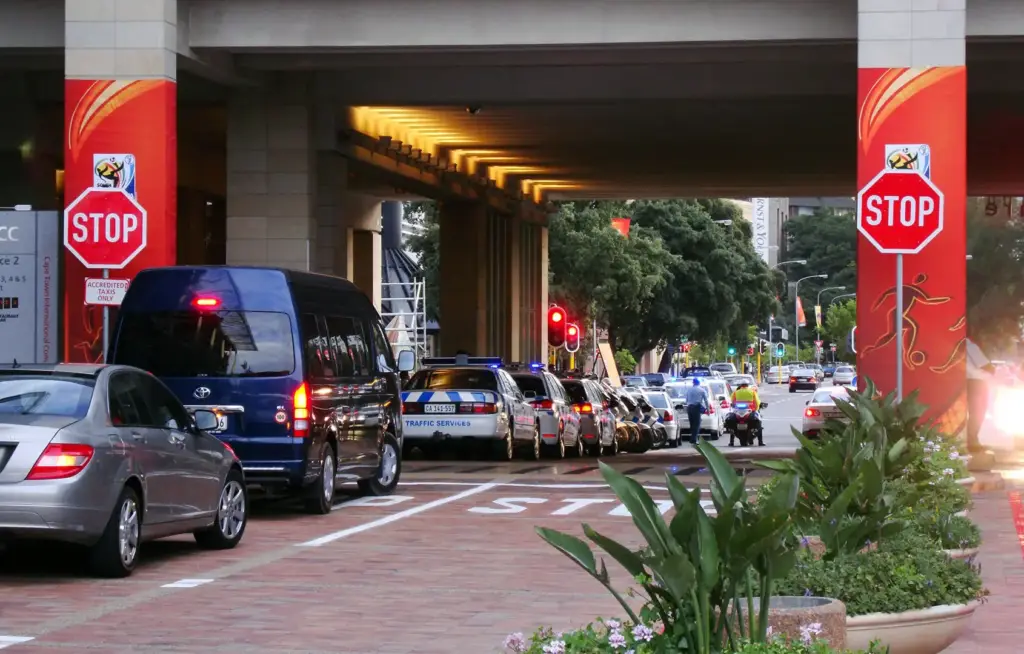
CTICC sits on the Cape Town foreshore at Convention Square, 1 Lower Long Street, Cape Town, 8001. The venue is walking distance from the V&A Waterfront, central Cape Town hotels, and several conference accommodation options.
By Public Transport
- MyCiTi BRT: Cape Town’s rapid bus network has stops within easy walking distance of the foreshore. Useful for short hops between CTICC, the city centre, and the V&A Waterfront.
- Airport — Cape Town International: about 20 km from CTICC. Allow 25–40 minutes by car depending on traffic.
Worth knowing — Most CTICC visitors arrive by car or pre-booked transfer rather than public transport. Plan on hospitality stand-staffing schedules around drive-in patterns, not commuter peaks.
By Road
CTICC is on the foreshore, accessible from the N1 and N2 motorways via the Buitengracht and Heerengracht off-ramps. Build vehicles route to the marshalling yards via Heerengracht. Watch the 2.1 m height limit on parking garages P1, P3 and P5; oversize vehicles must use the service-door approach.
On-site Services
Wi-Fi, catering, furniture, electricity, and security at CTICC.
CTICC offers exhibitor services through its own teams plus a published list of preferred partners. Free venue Wi-Fi is open and unsecured, which is fine for visitor browsing, but not for stands using lead capture, demos, streaming, or card processing. Order dedicated internet at the bandwidth you actually need (10 Mbps from R2,680/day, scaling to 300 Mbps). Catering is venue-led; external stand catering is allowed only in exceptional cases with a 30% corkage on food and beverage sales. Carpeting is compulsory in Halls 1–4B at R32/m². Halls 5–10 are carpeted by default. Electricity is metered at R1.20/kWh above an R100 threshold from hall bulk supplies; per-stand electrical orders are quote-based.
Worth knowing — CTICC’s catering structure favours pre-booked hospitality packages over on-the-day spend. Get hospitality budgets agreed at venue contracting, not stand fit-out.
Worth knowing — Single-phase power is available throughout the building; 3-phase points come from facility boxes and floor services. CTICC 2 pit clusters typically provide 2×16 A 3-pin caravan-type points, 1×32 A or 1×63 A 5-pin point and 1×data point. Each electrical point is for one item of equipment; no twin flex; conductive stands need double-earthing.
Costs To Plan For
Indicative rates for stand space, services, rigging, and ancillaries.
CTICC publishes a partial pricing model: venue services, internet, cleaning, carpeting, waste, and parking are public; per-stand electrical, security, and freight are quote-based. Treat the cards below as published-rate or market-benchmark indicators, not full event tariffs. Always reconfirm with a current quote.
Stand space — organiser package
Event-specific. CTICC publishes venue rates per day, per m² (exclusive of VAT), but per-stand package rates are set by each event organiser. Ask the organiser for shell-scheme, custom-package, and space-only rates as separate line items.
Stand space — venue base rate
Quoted per day, per m², exclusive of VAT 15%. CTICC venue base rate is set by CTICC sales for each event and is not publicly disclosed.
Power
Bulk metered electricity from hall supplies: R1.20/kWh above an R100 threshold. Per-stand order pricing is quote-based; CTICC plans on a 5 A allocation per stand for basic loads, with additional 16 A, 32 A, 63 A, and 125 A 3-phase available on request via floor services and facility boxes.
Rigging
Handled through CTICC’s contracted preferred rigging supplier with charges per rigging point. Quote-based; submit rigging plot with weights ahead of build.
Wi-Fi / IT
Dedicated internet from R2,680/day for 10 Mbps, scaling to R3,015 (20 Mbps), R5,690 (40 Mbps), R8,365 (60 Mbps), R11,710 (80 Mbps), R15,100 (100 Mbps), R31,000 (200 Mbps), and R39,480 (300 Mbps). Free venue Wi-Fi exists but is open and unsecured.
Furniture
Furniture, shell-scheme, and stand fit-out are organiser- or contractor-supplied. CTICC’s preferred stand contractors include Booth Exhibits™, a full EXSA member.
Catering
CTICC catering is venue-led. External stand catering allowed only in exceptional cases where CTICC cannot supply, with a 30% corkage on food and beverage sales per item.
Stand cleaning / security
Stand cleaning: R799/day per dedicated cleaner; R873/night for night-shift cleaning. Security: quote-based per event; not included in standard exhibition booking.
Insurance — public liability
Minimum R10 million per occurrence public liability cover. Submit proof to CTICC ahead of build.
Penalties (organiser examples)
Examples include marshalling-yard overstay fees, late freight surcharges, late-build cleaning charges, and on-site order surcharges. CTICC publishes rate cards for waste removal, hostess and waitron staffing; order in advance to avoid on-site premiums.
Parking
P1 exhibitor parking: R60 per day on event days. P3 and P5 follow normal CTICC parking rates. Height limit 2.1 m across P1, P3 and P5.
Always get a current quote:
Rates above are illustrative and event-specific. CTICC publishes some venue services and consumables, but space, per-stand electrical, security, and freight are quote-based. Request quotes from CTICC Exhibitor Services and the relevant preferred partners at least 6–8 weeks before the event.
CTICC vs Sandton Convention Centre
How CTICC compares to Sandton Convention Centre on scale, audience reach, and character.
CTICC and Sandton Convention Centre are South Africa’s two most established convention venues, but they serve different show profiles. The decision usually comes down to three factors:
Scale
CTICC: Around 11,399 m² in CTICC 1 plus 4,937 m² across Halls 5–7 in CTICC 2, with hall floor loads from 750 kg/m² to 3,000 kg/m². Best for events that need flexible hall mix, heavy exhibits, or simultaneous CTICC 1 + CTICC 2 use.
Sandton Convention Centre: Around 11,000 m² across two main exhibition halls plus the 4,743 m² Pavilion. Best for mid-to-large integrated trade-show + conference formats.
Visitor profile
CTICC: Strongest fit for Western Cape regional decision-makers and any show targeting Cape Town’s creative, tech, mining-services, and tourism sectors. Useful for international shows that benefit from Cape Town’s air links and conference draw.
Sandton Convention Centre: Stronger fit for senior decision-makers in financial services, ICT, mining, and professional services clustered around Sandton CBD.
Environment
CTICC: Foreshore precinct setting with V&A Waterfront walking distance and Cape Town airport about 20 km away. Two-building campus with skybridge.
Sandton Convention Centre: Premium CBD setting with hotel links, Gautrain access, and a polished multi-level venue experience.
CTICC and Booth Exhibits™
Booth Exhibits™ has experience designing and building stands at CTICC across mining, technology, creative-industry, and international trade events. For ideas on stand design that works in CTICC’s mixed CTICC 1 / CTICC 2 hall environment, see our project portfolio. To discuss a specific show at CTICC, contact us or see our South African exhibition stand design and build services.
Contact The Booth Exhibits™ Team
Exhibitor Templates
Working planning templates for CTICC. Use as a starting point and adapt to your specific show and organiser.
Exhibitor timeline
6–9 months before open
Owner: Commercial lead
Signed exhibitor or sponsorship contract in place and latest CTICC floor plan obtained from organiser or CTICC.
4–6 months before open
Owner: Project manager
Stand builder, freight agent, and technical lead appointed. Engage CTICC preferred suppliers (Scan Display, GL Events Cape Town) early.
10–12 weeks before open
Owner: Design lead
Final stand concept, scale plan, and power schedule agreed. Escalate any rigging, gas, vehicle, double-tier, or covered-stand items: these need 45-day permit lead time at CTICC.
~6 weeks before open
Owner: Ops lead
Submit service forms, exhibitor forms, indemnities, and contractor information. Order utilities, cleaning, security, catering, and badges via CTICC Exhibitor Services.
30 days before open
Owner: Safety lead
Insurance proof to CTICC (R10m public liability minimum), structural and rigging certificates, fire-retardant certificates, and any City fire/safety approvals for covered or temporary structures.
14 days before open
Owner: Logistics lead
Marshalling-yard slot confirmed (1.5h vehicles, 3.5h trucks), delivery labels finalised, customs status checked for international freight, and crew lists plus badges submitted.
7 days before open
Owner: Stand manager
Toolbox talk with contractors complete, snag list prepared, and emergency contacts including CTICC safety officer circulated.
Build-up
Owner: Stand manager
Electrical sign-off complete, aisles kept clear at 3 m minimum, and the stand fully dressed before organiser cleaning cut-off.
Breakdown
Owner: Logistics lead
Repack freight, retrieve empty cases, remove waste, hand over freight, and vacate the marshalling yard on time to avoid penalties.
Stand checklist
- Stand type confirmed: space-only / shell scheme / package / custom.
- Hall confirmed against floor load, ceiling, carpet status, and access door dimensions.
- Latest organiser floor plan and stand number received.
- Power schedule calculated item by item (CTICC plans on 5 A per stand by default; extra capacity is quote-based).
- Internet requirement confirmed: free Wi-Fi (open) or dedicated wired service.
- Structural review completed for any bridge, portal, header, rigged sign, raised deck, or stand higher than 3 m.
- Electrical contractor appointed and Certificate of Compliance scheduled before energisation.
- Fire-retardant certificates collected for drape, fabric, timber treatment, or scenic finishes (note: ceiling drape is not allowed).
- Public liability wording checked; CTICC interest noted; minimum R10m per occurrence.
- Marshalling-yard slot confirmed; all drivers briefed on time limits.
- Empty-case and storage method confirmed (no on-site storage at CTICC).
- Stand cleaning and stand security ordered if needed.
- Catering / sampling / corkage permissions obtained from CTICC.
- Emergency exits and gangways shown on internal stand plan; aisles 3 m clear.
- Breakdown method planned before show opens.
Risk assessment template
Temporary electrical installation
Initial risk: High
Control measures: Registered wireman, compliant cabling, no twin flex, no double adapters on 15 A points, double-earthing for conductive stands, and Certificate of Compliance before energisation.
Evidence: Electrical Certificate of Compliance.
Flown sign / truss / rigged AV
Initial risk: High
Control measures: Engineered design, competent rigger, safe working loads marked, secondary safeties fitted, and written approval from CTICC’s preferred rigging supplier with rigging plot submitted in advance.
Evidence: Rigging certificate or engineer sign-off.
Combustible décor / drapes
Initial risk: High
Control measures: Fire-retardant materials or treatment with certificate of conformity, extinguisher provision, and no blocked exits. Note: ceiling drape is not permitted at CTICC.
Evidence: Fire-retardant certificate.
Vehicle display
Initial risk: High
Control measures: Maximum 10 L fuel, battery disconnected, drip trays, visible extinguishers, hall-load check, and CTICC pre-approval. Confirm hall floor load can carry the vehicle weight before delivery.
Evidence: Vehicle method statement and CTICC approval.
Covered / multi-level stand
Initial risk: High
Control measures: Detailed drawings submitted to CTICC at least 45 days before event, structural engineer appointed, City fire/safety approval obtained, and post-build sign-off certificate issued before operation.
Evidence: CTICC permit at least 45 days before open.
Build-up crowding / blocked gangways
Initial risk: High
Control measures: Aisles kept at 3 m or wider, marshalling-yard slot adherence, and waste removed immediately to avoid late-build cleaning surcharges.
Evidence: Supervisor inspection log.
Hot work / sampling / demos
Initial risk: Medium
Control measures: No painting, welding, or cutting inside the hall; hot-work permit where required; CTICC pre-approval for cooking demos; queueing kept inside the stand footprint. LPG capped at one 19 kg cylinder where authorised; no liquid petroleum.
Evidence: Hot-work permit and CTICC approval.
Late freight / missed slot
Initial risk: Medium
Control measures: Confirm ETA, label freight correctly, brief drivers on the 1.5h/3.5h marshalling-yard limits, and hold margin around the slot window. Use CTICC’s recommended freight forwarder for international consignments.
Evidence: Freight plan and slot confirmation.
Theft / unattended valuables
Initial risk: Medium
Control measures: Lockable storage, nightly removal of valuables, and stand security where needed (CTICC stand security is quote-based).
Evidence: Security order or internal SOP.
Quick Reference
All key venue specs in one place for fast lookup.
Total venue space
~140,855 m² across CTICC 1 + CTICC 2 (connected by skybridge)
Main exhibition halls
CTICC 1 exhibition centre: 11,399 m²; CTICC 2 Halls 5–7 combined: 4,937 m²
CTICC 2 lower halls
Halls 5–7 (CTICC 2 lower) carpeted at 2,000 kg/m² floor load; Halls 8–10 (upper) at 750 kg/m²
Ceiling height
9 m to 18 m depending on hall family
Max stand height
Approval-based: stands above 3 m, double-tier stands, roofed stands, and scaffold-supported displays all need a permit at 45 days out
Service doors
Typically 7.2 m W × 5.3 m H; Hall 4B 7.98 m W × 5.90 m H. Parking height limit 2.1 m on P1, P3, P5.
Floor trenches
Floor trenches every 4.5 m in CTICC 2; pit boxes 5 m apart in Halls 8–10
Floor loading
3,000 kg/m² (Halls 2, 3); 2,000 kg/m² (Halls 5–7); 1,500 kg/m² (Halls 1A–4B); 750 kg/m² (Halls 8–10)
Power
Single-phase throughout; 16 A / 32 A / 63 A / 125 A 3-phase via facility boxes and floor services. Bulk metered at R1.20/kWh above R100.
Wi-Fi / IT
Free venue Wi-Fi is open and unsecured. Order dedicated internet from R2,680/day for 10 Mbps if your stand needs it.
Air-conditioning
Available across exhibition halls; confirm event-day cooling schedule with CTICC
Public transport
MyCiTi BRT stops within walk; central Cape Town hotels nearby
Airport
Cape Town International Airport is about 20 km / 25–40 minutes by road
Parking
Exhibitor parking in P1 (R60/day on event days), P3 and P5 (normal CTICC rates). 2.1 m height limit.
Rigging
CTICC contracted preferred rigging supplier; charges per point; rigging plot with weights required in advance
Catering
CTICC catering is venue-led; external stand catering only in exceptional cases with 30% corkage on F&B sales
Insurance
Public liability of at least R10 million per occurrence; proof to CTICC before build
Regulations
OHSA 1993, Safety at Sports and Recreational Events Act, City of Cape Town Event Safety By-law and Fire Safety By-law, National Building Regulations, and SANS codes
Address
Convention Square, 1 Lower Long Street, Cape Town, 8001
Other South African Venues
Exhibiting in South Africa?
Planning An Exhibition In South Africa?
From Sandton Convention Centre to the CTICC, Durban ICC and Gallagher, one team designs, builds and installs your stand at every major venue.
Book a call



Let’s Dominate Your Next Show
Five fields and your floor plan. We come back with an accurate cost and a design direction within 24 hours.